
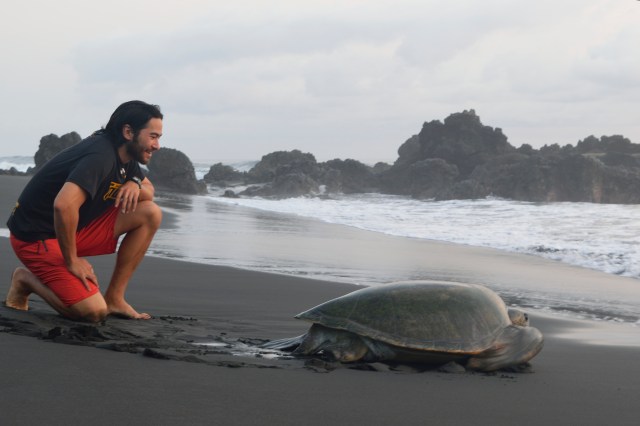
Seeing a sea turtle nest is a captivating and mesmerizing experience. As they haul themselves out of the surf, they go from a graceful swim to a slow and methodical crawl. It is at this moment in the turtle’s adult life that she is at her most vulnerable. Defenseless and out of her natural element, she is returning to the foreign landscape that hatched her. Entering a trance-like state, she makes a nest and lays her eggs. During this crucial segment of her life cycle, with instincts focusing her on the task at hand, she is safe to approach. After putting the final touches on her nest, researchers begin to scramble around her. Being careful not to disturber her, they collect as much data as they can. Measurements are taken and identification tags are applied in hopes of seeing her again.
It was an experience much like this one on the black sand beaches of Costa Rica that sparked my enthusiasm for marine conservation. After completing my first internship with a conservation project, I jumped from program-to-program, timing each new opportunity with the nesting season of a different species of sea turtle. My work with various conservation organizations has spanned nearly four years and taken me to the beaches of Central America, Western Africa, the Caribbean, and the United States. I have been very fortunate to work in amazing places with unforgettable people and each experience has further increased my passion for sea turtles and the ocean.
 My Time With Turtles